
In 2023, Cyclone Gabrielle triggered an unprecedented mobilisation of large woody debris (LWD), causing widespread damage and ongoing risks to bridges, roads, water pipeline, homes, waterways and beaches. Around 1.4 million tonnes of debris were deposited across our hill country and catchments.
Work continues to reduce the amount of LWD entering rivers and washing up on beaches and to prevent future issues. Enforcement has increased with 8 forestry companies successfully prosecuted. Clean-up efforts are ongoing and woody debris will continue to be seen in rivers and on beaches for some time.
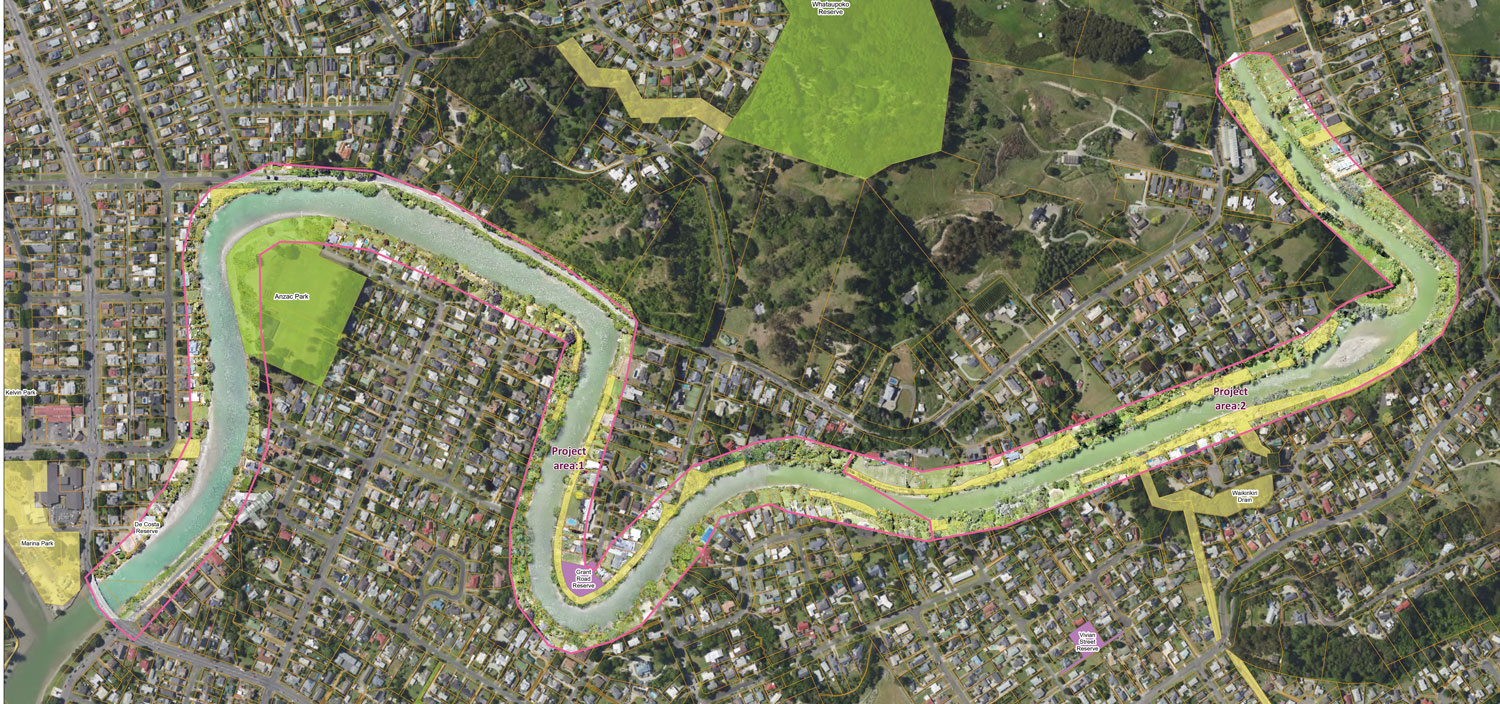
Waimatā River: William Pettie Bridge to the Cheese Factory
High-risk woody debris will be removed from a 4km section of the lower Waimatā River between the Waimata Cheese Factory and William Pettie Bridge, to improve safety and reduce flood risk.
This area has been prioritised given its use by river users and its proximity to homes and nearby infrastructure. Debris in this section can restrict river flow, trap additional material during floods and create safety hazards.
Site inspections and drone flights since December 2025 have helped assess and inform the project design.
How the work will be carried out
Work is expected to start in April and be completed by 30 June, subject to final planning and weather conditions.
The work will be carried out within the river channel in 2 sections - Marian Drive to William Pettie Bridge and the other from the Cheese Factory downstream to Marian Drive.
- Removal will focus on high‑risk woody debris only.
- Not all debris or vegetation will be removed.
Methods will be suited to the location and type of material and may include:
- Arborists cutting and removing unstable trees or large logs, including the use of winches where needed.
- Cutting large debris into smaller sections.
- Removing smaller debris from the river channel.
Impacts on the river environment will be minimised with vegetation that supports riverbank stability retained where possible.
Affected residents and river users will be kept informed. We recommend installing the Antenno app to receive updates.
During works, temporary noise, short-term access changes and contractor activity may occur. Please take care around work areas and follow on‑site signage.
Catchment and beach focus areas
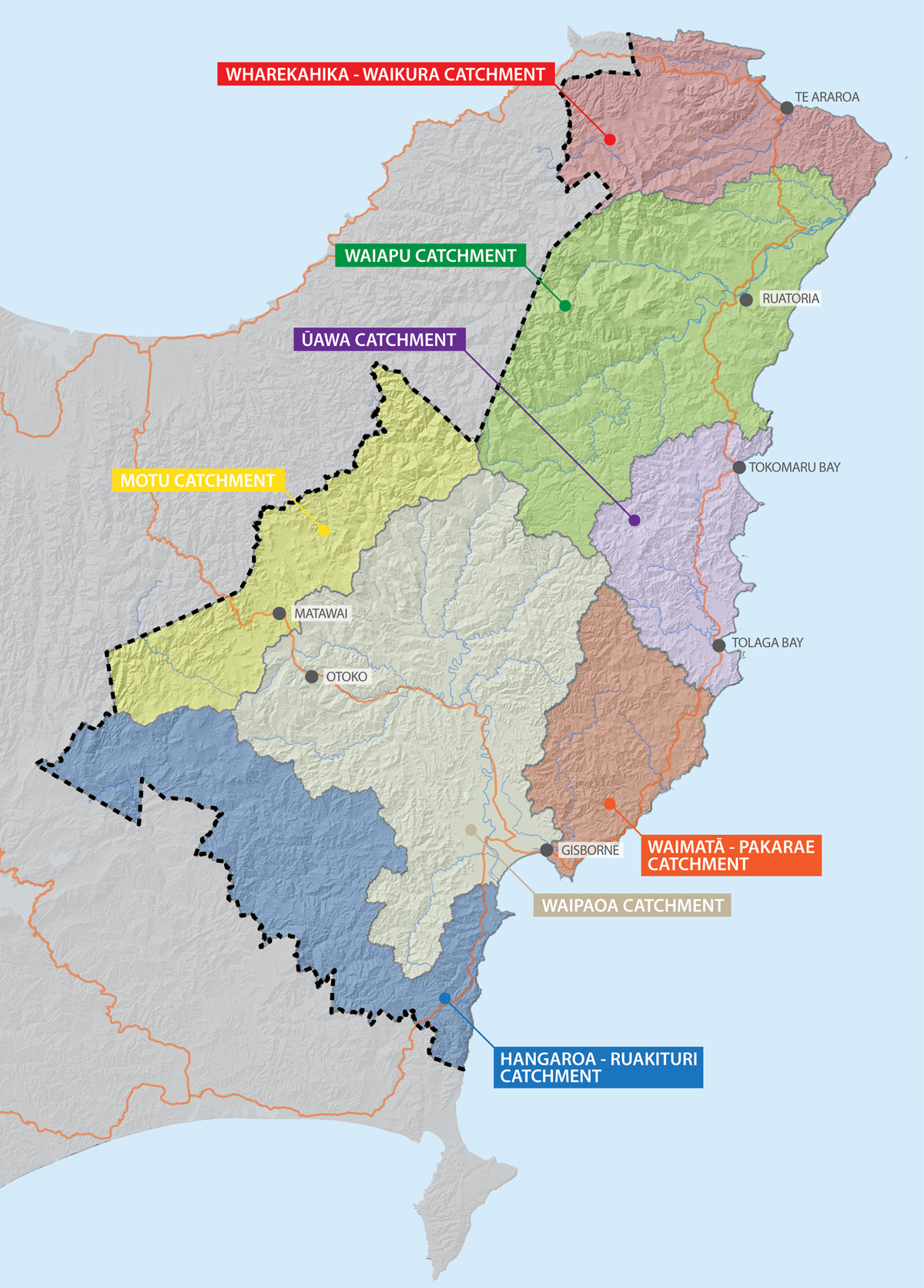
LWD removal is being priortised where debris poses the greatest risk to communities, waterways, beaches and infrastructure with a focus on vulnerable catchments and high-risk areas.
The priority locations include:
- Catchments: Waimatā, Hikuwai / Ūawa, Te Arai, Waiapu, Waipaoa, Pakarae, Hangaroa, Mangapoike
- Beaches: Midway, Waikanae, Kaiti, Ūawa, Whāngārā, Waipiro Bay, Tokomaru Bay, Rangitukia, Tikapa.
By focusing on these areas, we aim to minimise risks to life, protect critical infrastructure and preserve natural environments. Priorities will continue to be refined to strengthen resilience to future severe weather events.
Work to address remaining debris in the Uawa, Waiapu, Waipaoa and northern catchments will begin in early 2026.
Tairāwhiti Forestry Action Group (TFA Group)
The TFA Group was established in August 2024 by Forestry Minister Todd McClay to accelerate the clean‑up of woody debris following Cyclone Gabrielle. Council has received more than $80m in government funding for this programme. The TFA Group provides oversight and decision-making on how funding is prioritised and delivered.
The group brings together representatives from MPI, Council, iwi and industry. Their combined expertise, regional knowledge and networks guide how remaining risks to communities and critical infrastructure from woody debris are managed, with a strong focus on reducing risks to life and protecting key assets by removing debris from waterways and beaches.
Local contractors has been engaged to carry out highly specialised work across the Waipaoa, Uawa, Te Arai, Waiapu, Hikuwai, Hangaroa and Waimatā catchments.
TFA Group members:
- Chair - Patrick Willock
- Rod Sheridan
- Kerry Hudson
- Julian Kohn
- Toby Williams
- Rowan Struthers
- Kerry Worsnop
Up to December 2025, a total of 585,417m³ of woody debris has been removed from waterways and beaches across the region since May 2023.
Beach clean-ups
Beach cleans at Waikanae, Midway, Kaiti and Makorori and at Uawa, Whangara, Tikapa, Rangitukia, Anaura and Tokomaru Bay have removed a further 106,534m³ of woody debris.
Catchment extraction
Extraction work has been completed in parts of the Waimatā, Hangaroa, Mangapoike, Pakarae and Te Arai catchments. Debris has also been cleared at bridge repair and replacement sites to support wider recovery efforts.
Additional funding and forestry work
A further $27m in funding has been received from MPI. Part of this funding will be used to treat woody debris in forests on the most vulnerable and erosion‑prone land in the region, where risks to communities and critical infrastructure are highest.
Work in 2 forests in the Te Arai and Waimatā catchments is currently at the pre‑consent stage. Engagement is also underway with other forestry companies that meet the eligibility criteria and are not subject to Environment Court action or abatement notices.
Use of AI and technology
AI technology has been used to analyse high‑resolution aerial imagery, helping to detect the location and volume of woody debris across catchments and waterways.
In November, the project received the Association of Local Government Information Management (ALGIM) Project of the Year for Data Insights and Management, recognising its innovative use of AI and advanced project management tools.
Work completed up to June 2025
- Extraction completed in parts of Waimatā, Hangaroa, Mangapōike, Pakarae and Waiapu with final burning and site clean-up.
- Clearing debris from bridges is nearly finished.
- 175,941m3 of debris treated through burning or chipping.
- Beach cleanups removed 103,454m3 reducing the material being washed back into waterways.
- In total 567,468m3 treated under the DIA Sediment & Debris Fund sine 2023.
- AI used to improve detection of woody debris for more accurate forecasting, procurement and oversight.
Background to the woody debris problem
Woody debris on our beaches is a region-wide issue. There’s no simple solution and as there’s no single owner of the problem. Council will be part of a multi-agency response.
Wood debris continues to come ashore on our beaches, either with more frequent and intense storm events or over time as vegetation makes its way into our rivers and onto the beach.
Excess wood and large logs on the beach and at the shoreline pose a significant health and safety and environmental risk, as well as impacting the look and use of the beach.
A reminder to keep clear of logs close to the shoreline as waves can make them mobile and they are extremely heavy.
Council's principal scientist Dr Murry Cave has been focused on studying woody debris since Cyclone Cook in 2017.
Dr Cave developed a consistent method to work out the amount and different types of wood found in the debris. This method is now standard and is used by other councils and organisations across the country.
From this, we know the volumes and source of woody debris arriving on Waikanae, Ūawa and Tikapa beaches over the past 5 years.
We also know the different tree species and have found that on average, woody debris is predominately made up of pine and that exotic willows and poplar also contribute to the debris.
We also know how woody debris migrates through the river catchments and ends up on the beach. However, more research is needed.
We want more information on the best way to manage woody debris on our beaches.
Questions like what is the best way to remove the wood? Where will we put it? Is it desirable to leave some wood to help stabilise dunes systems, and if so, where and when?
Council has now increased its resources in the monitoring and compliance areas through the establishment of a new forestry team. In addition to normal compliance functions, the team will conduct both aerial mapping and on-the-ground inspections across Te Tairāwhiti to identify areas where woody debris is at high risk of mobilising and posing a risk to property, infrastructure and the environment.
To support these efforts, Council will reallocate funds from its existing 2023/24 budget. This will enable the recruitment of ecologists and technical officers to promote safe and sustainable forestry practices within Te Tairāwhiti.
Refer to our 2023/24 Annual Plan
In January 2023, Council received the petition from Mana Taiao Tairāwhiti and we agreed to:
- support request to the Government for an independent review into forestry land use
- accelerate the review of the Tairāwhiti Resource Management Plan (TRMP) rules
- investigate opportunities for participating in the first tranche of RM reforms
- establish a forestry project to assess all forests across the region for risk of debris and development of enforcement orders.
Council's view on the Report of the Ministerial Inquiry into land uses associated with the mobilisation of woody debris (including forestry slash)
In addition to our actions already underway, Council is engaging with Ministry for the Environment on recommendations made in the independent land use report released in May 2023.
Council wants the Government to urgently overhaul the National Environmental Standard for Plantation Forests (NES-PF), which we’ve consistently opposed. It creates a permissive regulatory framework that does not work for Te Tairāwhiti.
We have work underway to change our regional policy and rules using the full range of incentives and regulatory levers we have. These include a change in land use in Tairāwhiti consistent with the direction and aspiration outlined in our spatial plan Tairāwhiti 2050
We want to work with key partners to achieve this fast . We also want Government to support a rollout of our plan change.
Council welcome an independent technical advisor to review our plan change proposals. Council requires experts to help us work in this space. And all this needs to happen at pace.
We do agree with several of the recommendations particularly in relation to:
- Halting clear-fell harvesting and transitioning highly erodible land from exotic forestry to native forest - a detailed transition and implementation plan
- Flood capacity assessments
- While out of scope the recommendations concerning the state highways, electricity supplies
- Stabilising existing gully erosion
- Land use rules that control land use activities on land with extreme erosion, riparian planting, expanding mahi mot e taiao
- Supporting the East Coast exchange
- Biodiversity credits
- Just transition plan
With more frequent and intense storm and rainfall events in the past few years, it's been necessary to do more beach clean-ups.
Woody debris on our beaches continues to accumulate, either through one-off storm events or incrementally over time as vegetation makes its way into our rivers and eventually onto the beach.
These have been focused on Ūawa and City beaches and cost $360,000 during the 2021/22 summer season.
Council spent over $320,000 in the 2022/23 financial year on beach clean-ups at Ūawa and the main city beaches. This was in addition to the cyclones Hale and Gabrielle clean-ups the forestry industry carried out.
Historically, farmers would bring machinery to the beach for an annual clean-up prior to the summer season.
Over time it was easier for Council to do these clean-ups. Council's only previous position commitment to beach clean-ups was within the Midway Beach Management Plan (1999) which has now lapsed.
Up until now, the focus has been on beaches that have surf lifesaving clubs and are subject to build-ups of woody debris, such as Waikanae, Midway and Ūawa beaches.
Annual clean-ups continue to take place around Labour Weekend using existing resource consents to collect and remove material from both city beaches and Ūawa beach.
Council has spent on average $200,000 a year to do this over the past years.
Since 2018, Council has successfully taken prosecutions relating to forestry with ongoing investigations post cyclones Hale and Gabrielle.
For more information on the forestry company prosecutions